Previous Article:
Sleep, Time & the Circadian Saboteur — Why Neurodivergent Brains Refuse to Keep “Office Hours”
(Blog 4 of the Hidden-Patterns series. Light science, strong clarity, practical take-aways)
Some people live mostly in the present. They feel today, act today, rest today.
For many neurodivergent minds, it’s not so simple. The past doesn’t stay put, and the future arrives early.
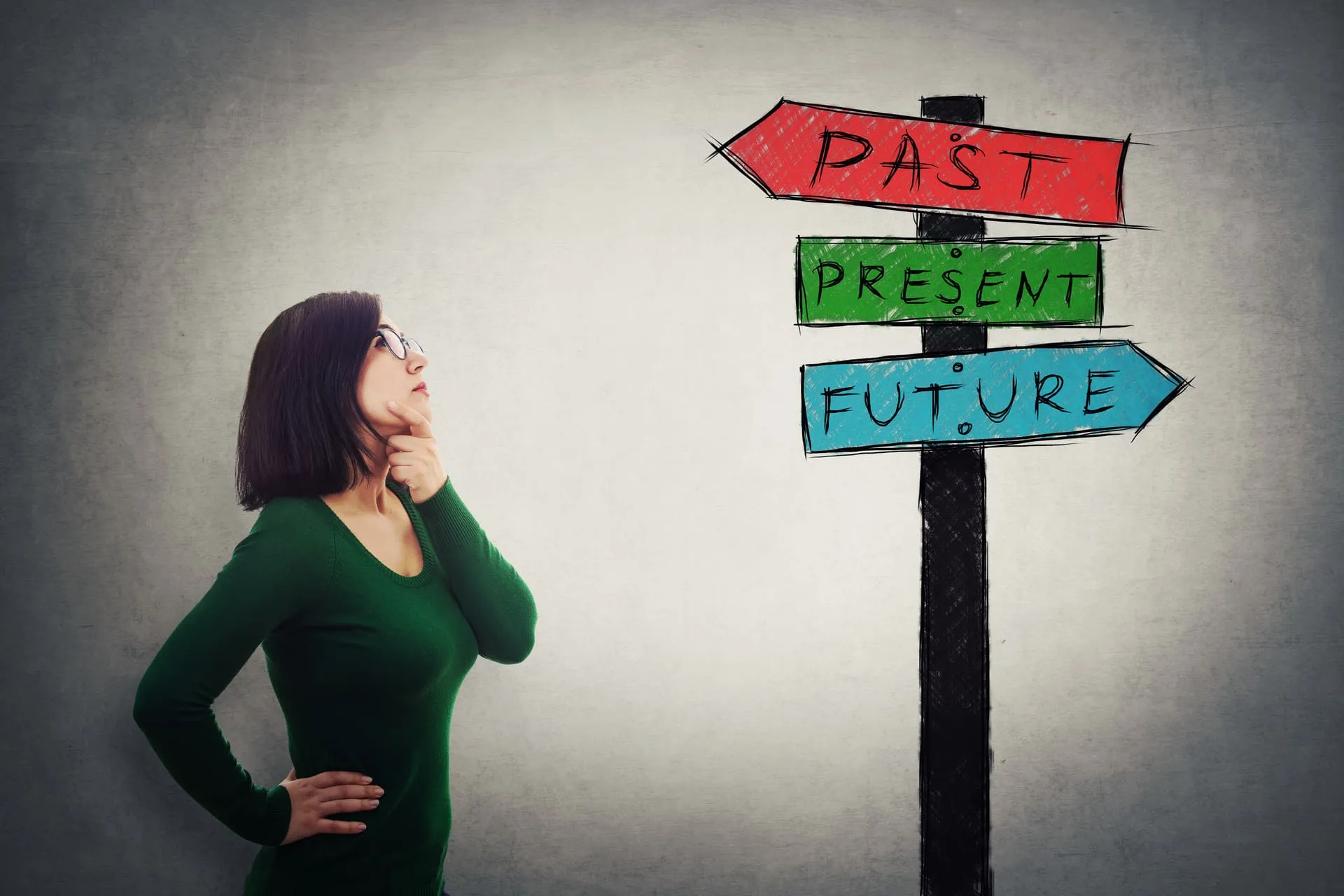
I call it emotional time travel: the brain’s way of dragging you backwards into shame you already survived, or hurling you forward into panic for things that haven’t happened yet.
The Backward Pull - Reliving Shame
I hear this often in the therapy room: “I know it’s over, but my body doesn’t know it.”
An awkward presentation at work. A teacher’s cutting remark from childhood. The friend who never replied. Years later, the stomach still flips, the chest still tightens.
This isn’t weakness. It’s the neurodivergent brain’s exquisite pattern memory: high-detail recall mixed with high emotional charge. You don’t just remember; you re-feel.
The Forward Lurch — Pre-living Panic
Equally familiar is the leap into the future: rehearsing conversations that haven’t happened yet, feeling the mistake before you make it, carrying shame for an outcome that only exists in your imagination.
For ND minds, it’s not just “anticipatory anxiety.” It’s immersive. The nervous system auditions for a play it never wanted, complete with stage fright before the curtain even rises.
Why It Happens
-
Neuroscience helps us here.
The amygdala, our brain’s rapid-response alarm, doesn’t distinguish between memory, imagination, and real-time threat. Whether it’s a decades-old humiliation, a feared rejection that hasn’t happened, or a present danger, the amygdala fires the same cascade of stress signals. That’s why emotional time travel feels so real — your body reacts as if it’s happening now. -
The prefrontal cortex, though slower, brings context and regulation. Given the chance, it can remind us: that was then, this is now. The work of therapy — and of Theracoaching™ — is often about creating just enough pause for the prefrontal cortex to speak over the amygdala’s alarm.
-
The default mode network leans toward replay and pre-play — running the tape of “what went wrong” and “what might go wrong.”
-
Add autistic detail memory, ADHD fast-forward thinking, or trauma-shaped vigilance, and you have emotional time travel: vivid, consuming, exhausting.
**
The Cost**
Living in two timelines steals from the only one you can act in — the present.
It keeps shame alive long after the event. It burns energy rehearsing futures that may never come. It convinces the body it’s unsafe, even in safe places.
How to Break the Loop
You can’t stop your brain from remembering or imagining. But you can interrupt the fusion between thought and body.
-
Name it — “This is emotional time travel, not a fresh threat.” Naming recruits the thinking brain.
-
Anchor your body — feet on the ground, a hand on your chest, a slow exhale. Signal safety to your nervous system.
-
Time-stamp it — “That was then. This is now. I survived it.” Or, “That hasn’t happened yet. I don’t need to feel it now.”
-
Contain it — Write the fear or shame on paper, fold it, place it in a box or journal. Externalise it.
-
Reclaim the present — One small sensory act: sip cold water, stretch, step outside, stretch, let yourself yawn, even give yourself a quick self-high five. (I do a little shimmy dance too). Remind your body where it actually is.
Where Else This Shows Up
I hear it from ND clients. I hear it from new mothers. I hear it between couples. The form changes, but the loop is the same.
In Early Motherhood
New mothers often describe emotional time travel vividly: replaying the birth, second-guessing every decision, worrying about what tomorrow might bring.
My colleague, Dr Helena de Klerk, speaks directly to this in her upcoming course Navigating Motherhood with Confidence. If you would like to book onto this course, which is launching on November 5th, you can find more details here (https://www.helenadeklerk.com/perinatal-1)
Couples & Relational Work
Emotional time travel doesn’t just happen in our own minds — it shows up in relationships too. A sigh, a tone of voice, or a delayed reply can pull one partner back into past shame or push the other forward into future panic.
My colleague Dr Priscilla Short works with couples and individuals around exactly this. Her TIMBBBER Framework — From Reactivity to Relational Responsiveness — is a practical, compassionate tool for recognising and transforming those reactive patterns. It helps individuals and couples pause, reflect, and choose a relational response instead of a reflexive one.
Her work creates space for partners to hear each other in real time, not through the echo of old scripts.
Explore more of her approach here: TIMBBBBER – Priscilla Short.
Why This Matters
Breaking the loop isn’t about denying the past or ignoring the future. It’s about helping the nervous system stop time-travelling long enough to heal, rest, and act.
For neurodivergent people especially, the very traits that fuel emotional time travel — memory for detail, sensitivity to pattern, the capacity to forecast — are also sources of wisdom. When grounded, they become gifts.
Kindred Work & References
-
Bessel van der Kolk — The Body Keeps the Score: on how trauma lives in the nervous system.
-
Dr. Gabor Maté — When the Body Says No: the cost of carrying stress and anticipatory vigilance.
-
Cathy Park Hong — Minor Feelings: on racialised memory, shame, and the body’s time loops.
-
Russell Barkley — ADHD and “time blindness.”
-
Autistic writers like Naoki Higashida (The Reason I Jump) and Dr. Devon Price (Unmasking Autism) — memory and anticipation as sensory events.
-
Research on the default mode network (Raichle, Buckner, Andrews-Hanna): its role in memory replay and rumination.
-
Polyvagal theory (Stephen Porges): why anchoring the body can reset emotional time travel loops.
A Final Thought
You don’t need to unlearn the past or stop anticipating the future. You only need to remind your body it doesn’t live in either place.
Choose one act that roots you today — a sip of water, a stretch, a pause. That’s where the loop breaks.
Call to Action
Want more reflections like this?
Explore the Hidden Series for fresh perspectives on the unseen struggles — and hidden strengths — of neurodivergent life.
Does “emotional time travel” sound familiar?
Share your experience — your story might be the mirror someone else needs.
Subscribe to the Neurodiverse You Newsletter