Clinical Team
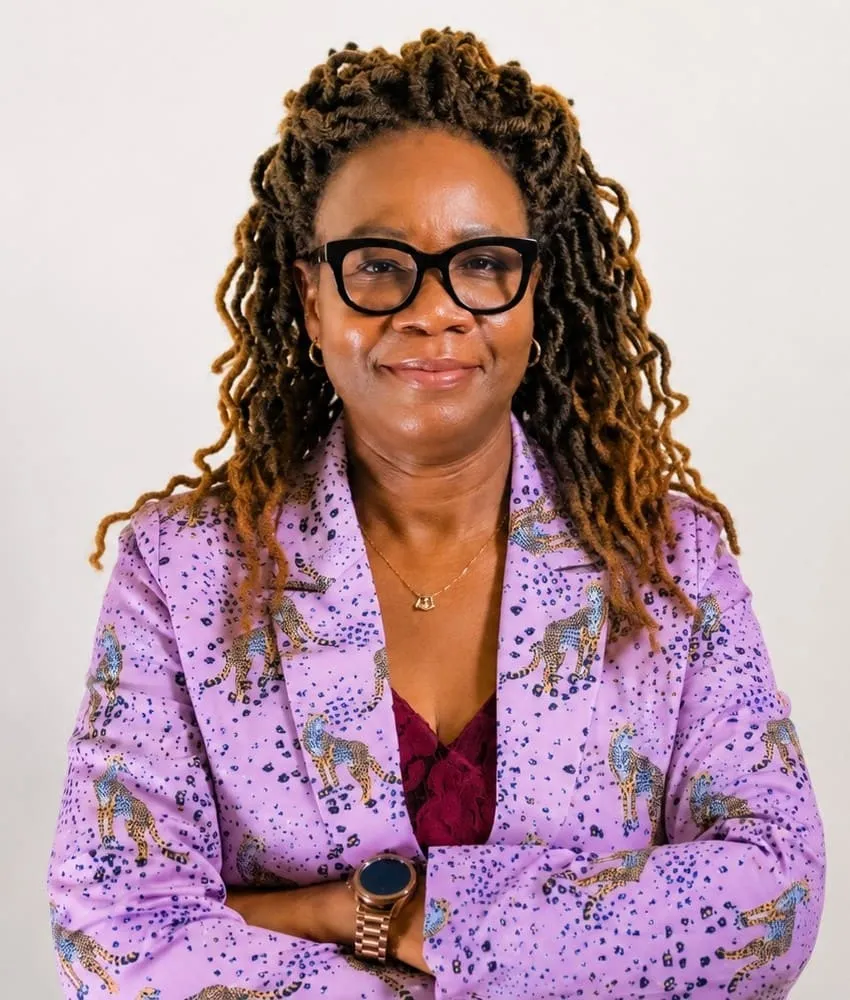
Dr Miriam Mavia-Zając
Founder & CEO; Consultant Chartered Psychologist; CQC Registered Manager & Nominated Individual
Known to many clients, families and colleagues simply as Dr Miriam, Dr Mavia-Zając is the Founder and Chief Executive Officer of NDY and a Consultant Chartered Psychologist with more than three decades of experience across mental health, psychology, neurodivergence, education and organisational practice. Her work is grounded in formulation and in understanding the whole person, including what may be hidden behind competence, achievement or adaptation.
She leads the clinical governance of NDY as the CQC Registered Manager and Nominated Individual, and clinically co-leads the service with Dr Sharma, Medical Director and Consultant Adult Psychiatrist.
At the heart of Dr Miriam’s work is formulation: looking beyond labels and presenting difficulties to understand how development, relationships, culture, identity, environment, strengths and adaptations have come together to shape the person in front of us.
She has a particular interest in high-achieving, high-performing and high-capacity individuals, whether neurodivergent or not, especially where competence, achievement or sustained performance can obscure difficulty and personal cost. Her work explores the distinctions between capability and capacity, performance and sustainability, and visible competence and hidden need.
Neurodivergence is a further specialist area of her practice, particularly ADHD, autism and combined presentations. Her approach is neuro-affirming, psychologically rigorous and attentive to the intersections between neurodivergence, mental health, camouflaging, executive functioning, identity, relationships and context.
Dr Miriam also has a strong interest in cultural formulation: understanding how culture, family and community expectations, migration and belonging, gender, beliefs about achievement and distress, and wider social contexts influence how people experience themselves and how they are understood by others. This work informs Seeing the Unseen™, including specialist training around hidden need, costly competence and cultural formulation.
Alongside clinical practice, Dr Miriam is an author and psychological writer. Her writing spans psychology, human functioning, identity, relationships, capacity, responsibility, adaptation and the personal cost of sustained performance, with a particular interest in naming the ineffable: finding language for experiences that are felt long before they can be clearly explained. Neurodivergence forms an important strand within this wider body of work.
Her academic background is interdisciplinary. Before her career became centred on psychology and mental health, she also taught and lectured in chemistry at university level — a scientific foundation that continues to shape her analytical and systems-based approach to psychological work.
Her wider contribution includes community and social-impact work. She spearheaded the formation of the Black Women Impacted by ADHD group and the ADHD UK Police Impacted by ADHD group, both of which are hosted by ADHD UK. She also leads NDY Tomorrows CIC, a community interest arm of NDY, which works to widen access to culturally responsive, trauma-aware psychological and neurodevelopmental understanding and support.
Qualifications & Professional Standing
Dr Miriam is an HCPC-registered Practitioner Psychologist and a Chartered Psychologist with the British Psychological Society.
Her academic background includes a Doctorate in Counselling Psychology, an MSc in Psychology and an MSc in Abnormal Psychology. She also completed a Master of Studies (MSt) in Clinical Effectiveness and postgraduate studies in psychiatric health, both at the University of Cambridge.
Her postgraduate and continuing professional development includes clinical governance, leadership and service development, alongside advanced training in psychological therapies, neurodevelopmental assessment, trauma-informed practice and culturally responsive formulation.
Across her clinical work, writing, teaching and leadership, a consistent principle remains: to understand the whole person, including what may be hidden behind competence, achievement or adaptation.
Registrations & Accreditations
Questions about pathways or clinicians?
If you are unsure which service or clinician is the best fit, we can help you triage your enquiry and explain next steps.